


In the fast-changing world of internet slang, “simp” stands out as one of the most widely used and debated terms. You’ve probably seen it in comments, memes, or videos across social media platforms. It gets thrown around as everything from a light-hearted joke to a sharp insult. But what does simp really mean? This article breaks down the definition, origins, history, cultural context, and more to give you a clear and thorough understanding of the word.
What Does Simp Mean? The Core Definition
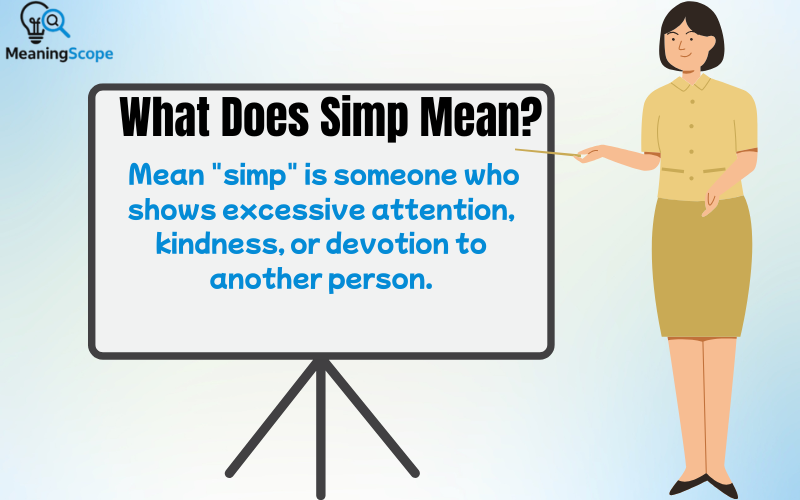
At its most basic level, a “simp” is someone who shows excessive attention, kindness, or devotion to another person—usually in a romantic context—often without receiving anything in return. The term is most commonly applied to men who go out of their way to please or impress a woman, even when the interest isn’t reciprocated.
“Simping” (the verb form) describes actions like constantly complimenting someone, defending them online no matter what, buying gifts with no expectation of return, or putting their needs far above your own. While it can be used playfully, it often carries a tone of mockery, suggesting the person is overly eager, desperate, or lacking self-respect.
Origins of the Word Simp
The word “simp” has surprisingly old roots. It began as a shortened form of “simpleton,” meaning a foolish or gullible person. The term appeared in English as early as the beginning of the 20th century. By the 1920s, it was used casually to describe someone naive or easily taken advantage of.
This original meaning—someone who is overly trusting or simple-minded—laid the groundwork for how the word would later evolve in modern slang.
History and Evolution of Simp in Culture
The modern slang version of “simp” emerged in the 1980s and 1990s within West Coast hip-hop. Rappers such as Too Short, E-40, and others used it to describe a man who was soft, overly sympathetic, or easily manipulated—essentially the opposite of a “pimp.”
The pimp vs. simp contrast became a recurring theme in rap lyrics throughout the 1990s and early 2000s. Artists like Three 6 Mafia, Sir Mix-a-Lot, and 2Pac all referenced the term to highlight weakness or lack of game in romantic situations.
The word gained new life in the 2010s through online communities, particularly in forums discussing gender dynamics. By 2019–2020, it exploded in popularity on TikTok, where short videos and memes turned “simp” into a viral sensation. Challenges, duets, and comedy skits helped spread it rapidly, and soon it was everywhere on social media.
Events like “No Simp September”—a playful online challenge where people pledged to avoid simping behavior—further cemented its place in internet culture.
Cultural Context and Usage Today
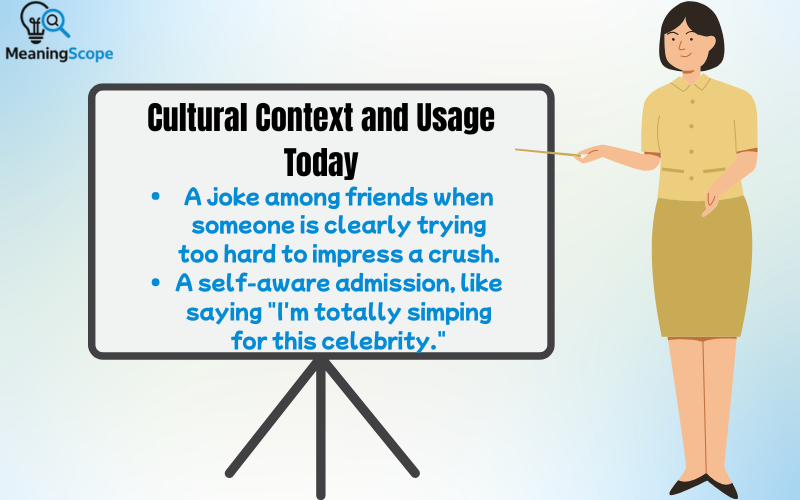
Today, “simp” is used in a wide variety of situations. It can be:
- A joke among friends when someone is clearly trying too hard to impress a crush.
- A self-aware admission, like saying “I’m totally simping for this celebrity.”
- A harsher criticism in online arguments, especially when someone defends or supports another person excessively.
However, the term has faced criticism for potentially promoting toxic ideas about masculinity. Some argue that calling basic respect or kindness “simping” discourages healthy behavior in relationships. Others see it as harmless internet humor.
Though most often directed at men toward women, the concept can apply to anyone showing one-sided devotion, regardless of gender.
Examples of Simp in Everyday Language
Common scenarios labeled as simping include:
- Spending large amounts of money on a streamer or content creator in hopes of getting noticed.
- Constantly liking and commenting on someone’s social media posts while getting no response.
- Defending a celebrity or influencer online against any criticism, no matter how valid.
In lighter uses, people might jokingly call themselves a simp for a fictional character, musician, or athlete they admire intensely.
Related Post: What Does Slay Mean? Uses, Examples, Definitions, History
(FAQs)
Is being called a simp always negative?
No. It depends on context. Among friends, it can be affectionate teasing or self-deprecating humor. In more serious or hostile settings, it can be a genuine insult implying weakness or lack of boundaries.
Can women be called simps?
Yes, although it’s much less common. The core idea—excessive, unreciprocated devotion—applies regardless of gender. However, cultural usage has overwhelmingly focused on men.
Is simping the same as being nice or respectful?
Not exactly. Being polite and respectful is generally seen as positive. Simping crosses into excessive, often self-detrimental behavior done primarily to gain favor or approval.
Conclusion
“Simp” has traveled a long path—from an old-fashioned word for a fool, through hip-hop culture, to a dominant piece of modern internet slang. It reflects ongoing conversations about relationships, gender roles, self-respect, and how we interact online.
While it’s often used for laughs, it also highlights real tensions around expectations in romance and friendship. Understanding the term’s meaning, history, and nuances helps navigate today’s digital conversations more thoughtfully—whether you’re avoiding being labeled one, using it yourself, or just trying to keep up with the ever-shifting language of the internet.

